Splitting Chores as a Couple: Use a Shared List, Not a Chart
When chore-splitting keeps falling apart, it's usually a structure problem, not a caring problem. A fixed chore chart starts slipping the first time someone works late or life gets in the way. Put the housework on a to-do list you both see instead — who's handling what becomes visible, and things sort themselves out without a conversation.
Why do chore charts fail even when you make one?
Because the chart is fixed while housework changes every week. You can agree "laundry is mine, dishes are yours," but a real week keeps producing things that aren't on the chart — dropping off dry cleaning, paying a bill, a gift for the in-laws. This "off-the-chart work" piles onto one person, and the balance tips.
The bigger issue is invisible labor. Noticing the toilet paper is running low, remembering recycling day, keeping the shopping list in your head — the tracking itself is work, and it never appears on a chart. A task that lives in only one person's head doesn't exist for the other. Most of the "why do I have to ask?" resentment starts right there.
What should couples use to share their to-dos?
- A whiteboard or paper chart on the fridge — highly visible, but only at home. You can't add the thing you thought of on your commute, and you can't check it from outside.
- The group chat — easy for asking, but requests sink into the conversation. We covered why in the family grocery list post.
- A shared calendar — great for dated events. But most chores are like "buy wet wipes": they have no date, and forcing one on them is how the calendar stops getting used.
- A shared to-do app — holds dated and undated tasks alike, with check-offs, reminders, and real-time sync built in. The right shape for chores, which keep appearing and disappearing.
Setting it up in practice
Here's how to start with Togethery.
- Create a space for the two of you and invite your partner. A 6-digit invite code connects you right away.
- Split areas with folders. Three are plenty to start: "Weekly chores" / "Groceries" / "Home projects" (longer-horizon things like moving prep or researching appliances).
- Put dates on anything with a deadline. A reminder arrives ahead of that date, and a morning briefing gathers today's tasks every morning. Notifications stay quiet at night.
- Look at the calendar together on weekends. Dated to-dos gather there automatically, so you just sit side by side and skim the week ahead.
Habits of couples who make it stick
- Write it down the moment it comes to mind. "We need trash bags" goes on the list the second you think of it — done. Neither of you has to hold it in your head, both of you can check the list anytime, and "I told you about that" disappears.
- Check things off on the spot. Let the screen do the reporting instead of "I did this, by the way." Watching the completed marks pile up is what makes each other's work visible and fair.
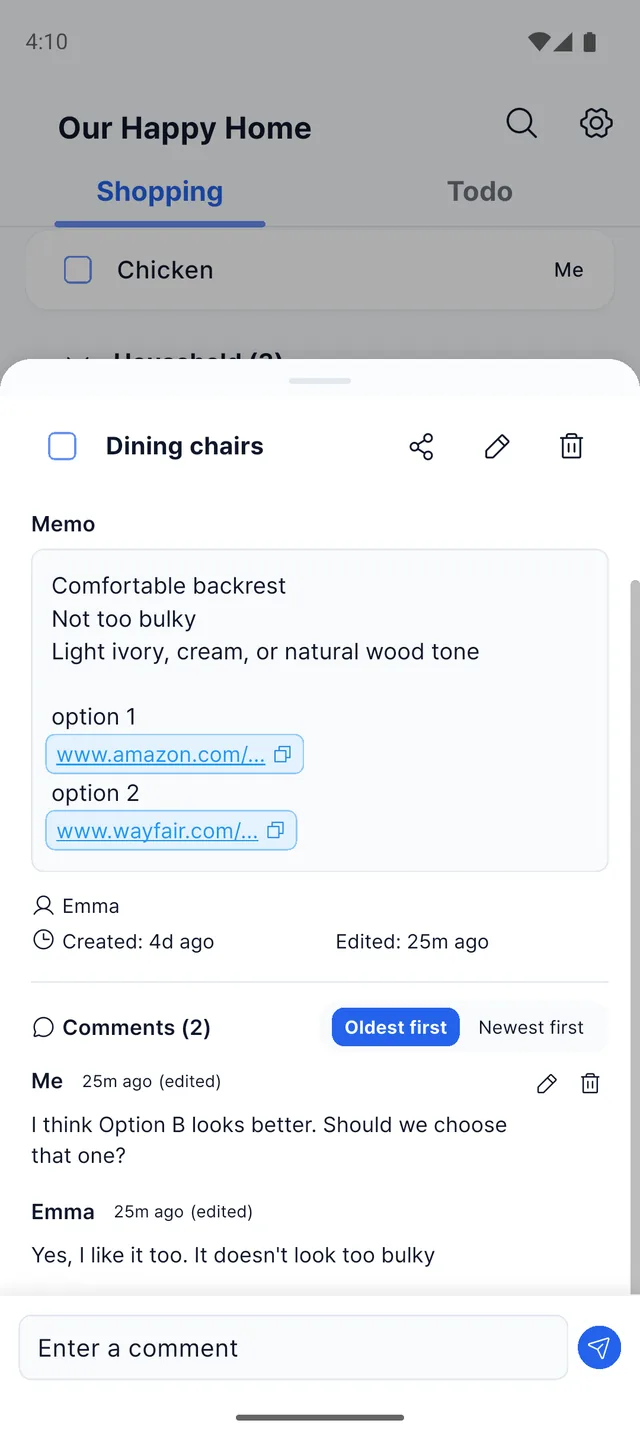
- Keep the talk in item comments. "I'll take this one" or "thank you 🙂" attached to the task itself means no "when did you say that?" later.
- Cut tasks down to bite size. "Clean the bathroom" and "vacuum the living room" beat "deep clean" — easier to start, more satisfying to check off.
- Treat it as a notepad, not a scoreboard. If it becomes a tool for counting who did more, it won't last. "Our household's work, visible in one place" is the whole point.
Frequently asked questions
Can we make a space for just the two of us?
Yes. A space is shared only with people you invite via a 6-digit invite code. Start as a couple, and if your family grows, just keep using the same space.
Will it send us reminders?
Yes. A morning briefing gathers today's tasks every morning, and reminders arrive ahead of the date and time you set. At night, notifications stay quiet so they don't disturb you.
Can we see things on a calendar too?
Yes. To-dos with a date gather automatically on the calendar, along with your region's public holidays.
Is it free?
Yes. Installing the app and all core features are free.
Put your household on one shared list